
Artificial intelligence tools are reshaping the way we communicate across languages, and ChatGPT is no exception. Millions of people now use it daily for everything from drafting emails to summarizing research. So it is only natural to wonder: can ChatGPT translate medical documents? The short answer is yes, it can produce a translation.
The more important question is whether that translation is accurate, safe, and legally acceptable, and that is where things get complicated.
In this article, we break down exactly what ChatGPT does when it translates medical content, where its limitations lie, and why professional human translators like the team at Crown Company remain the gold standard for medical document translation.
What Is ChatGPT Doing in Translation?
ChatGPT is a large language model (LLM) trained on vast amounts of text data. When it translates, it does not look up words in a dictionary or apply grammar rules manually; it predicts the most statistically likely sequence of words in the target language based on patterns it has learnt during training.
This approach works surprisingly well for general text. However, medical translation services requires more than pattern matching. It requires:
- Precise understanding of clinical terminology.
- Knowledge of regulatory standards in the target country.
- Contextual judgement that can distinguish between similar-sounding but very different medical terms.
- Accountability — something an AI model cannot legally provide.
Can ChatGPT Translate Medical Documents?
- Technically, yes. ChatGPT can process and translate medical documents such as discharge summaries, lab reports, patient histories, and clinical trial data. For a quick, rough understanding of a foreign-language document, it can be a useful starting point.
- But technical capability is not the same as suitability. Medical translation carries serious consequences. A mistranslated dosage instruction, an incorrectly rendered diagnosis, or a misunderstood drug interaction can put a patient’s life at risk.
- ChatGPT has no medical licence, no professional liability, and no mechanism to flag its own errors with the confidence a certified medical translator would.
- Additionally, many healthcare systems, insurance companies, and immigration authorities require certified translations of medical documents. ChatGPT cannot issue a certificate of accuracy, which means its output is not accepted in most formal or legal settings.
So if you want a reliable medical translator you can get in touch with our team and they will help you immediately .
How Useful Is ChatGPT in Medical Translation?
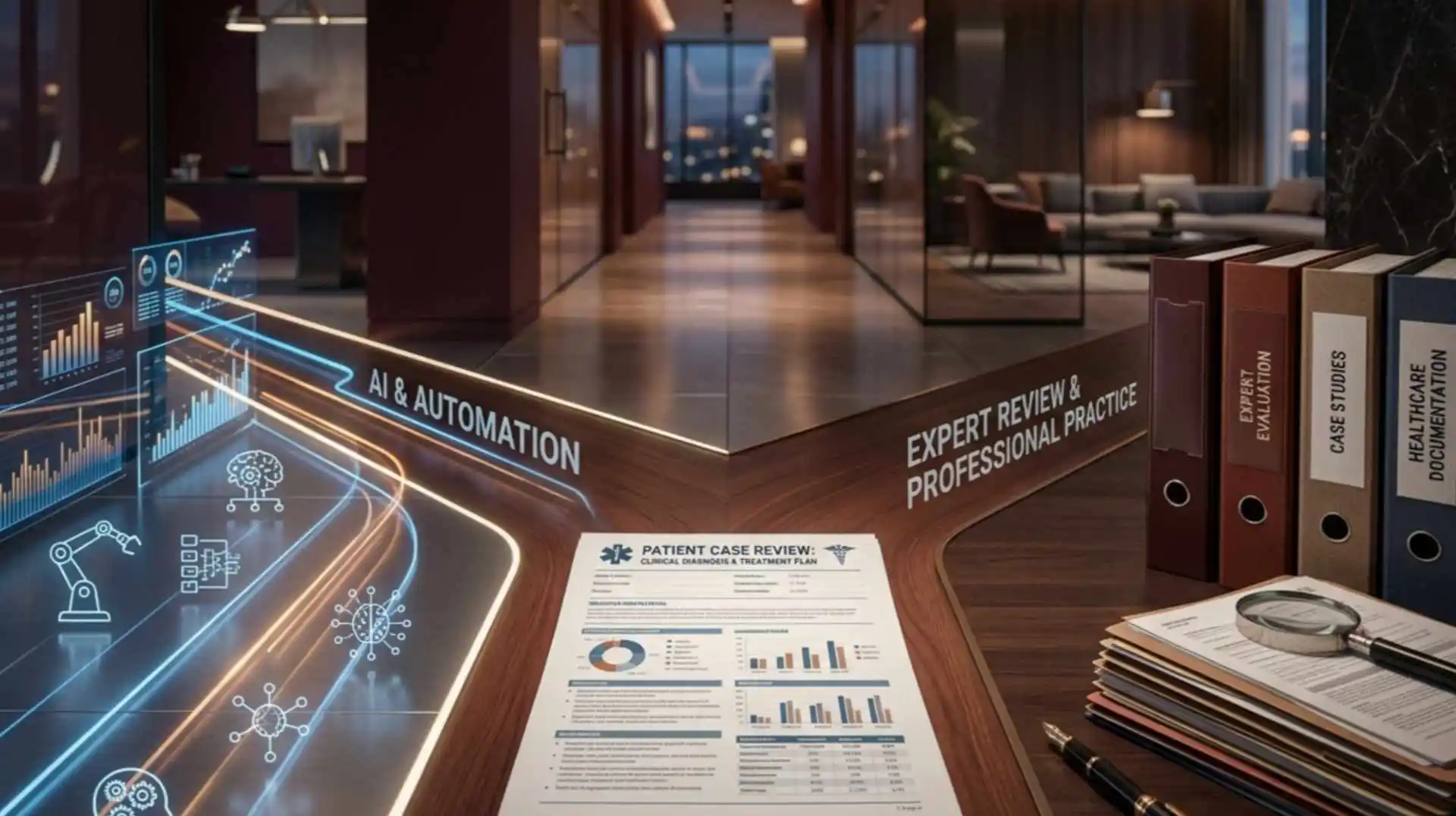
There are scenarios where ChatGPT can add genuine value in a medical translation workflow particularly when used as a support tool rather than a standalone solution:
- Quick comprehension: A patient trying to understand a foreign-language medical report can use ChatGPT to get a general idea before consulting a doctor or certified translator.
- First-draft assistance: Professional translators can use AI tools to generate initial drafts, which they then review, correct, and certify, significantly reducing turnaround time.
- Terminology lookup: ChatGPT can suggest equivalent terms in another language, which a specialist then verifies.
What ChatGPT cannot replace is the human judgement, domain expertise, and legal responsibility that a qualified medical translator carries. When the stakes are high, surgery authorizations, insurance claims, immigration medical records – there is no room for AI guesswork.
Is ChatGPT a Reliable Tool for Explaining Medical Terms?
This is one of the most searched questions about AI and healthcare, and the answer is nuanced. ChatGPT can explain many medical terms in plain language, and it often does so accurately for well-documented, common conditions and procedures. However, there are important caveats:
- It can hallucinate: ChatGPT sometimes generates confident-sounding explanations that are factually wrong, especially for rare conditions or newer medical developments.
- It lacks clinical context: Without knowing the patient’s full medical history, the model may explain a term correctly in isolation but misrepresent its significance in a specific case.
- It is not a substitute for medical advice: Relying on ChatGPT for medical interpretation could lead to misunderstanding a diagnosis or treatment plan.
For a general understanding of a term, ChatGPT can be a helpful starting point. For anything that will influence a medical or legal decision, a certified professional translator is essential.
How to Translate Medical Documents the Right Way?
Translating medical documents is not simply a matter of converting words from one language to another. It is a structured process that protects both the patient and the institution. Here is how it should be done:
- Work with a certified medical translator: Always choose a translator with verifiable medical or healthcare credentials and experience in the relevant speciality.
- Ensure subject-matter expertise: A translator working on oncology reports should have a different specialisation from one handling pharmaceutical trials.
- Request a certificate of accuracy: Any document intended for official use, visa applications, insurance claims, or legal proceedings requires a certified translation with a signed statement of accuracy.
- Maintain confidentiality: Medical documents contain sensitive personal data. Ensure your translation partner complies with relevant data protection regulations.
- Choose a translation company with a review process: Professional companies such as Crown Translation use a multi-step process: translation, editing, and proofreading to guarantee quality.
Read About: What Are the Problems with Medical Translation?
At Crown Translation company, we provide certified medical translation services across a wide range of language pairs, including but not limited to:
- Arabic to English and English to Arabic: serving patients and healthcare providers across the GCC and wider MENA region.
- French, German, Spanish, and Italian: for European medical documentation and clinical trial submissions.
- Russian, Chinese, Japanese, and Korean: supporting patients and institutions operating in Asian and Eastern European markets.
- Turkish, Persian, Urdu, and other regional languages: meeting the needs of diverse patient populations across the Middle East and South Asia.
If you need a language combination that is not listed here, contact our team. We work with a global network of specialized translators and can accommodate most requests.
Why Choose Crown Translation as Your Translation Partner?
Crown Translation is a Dubai-based translation company with deep expertise in certified medical and legal document translation. Here is what sets us apart:
- Certified translations accepted by hospitals, embassies, courts, and insurance providers across the UAE and internationally.
- Subject-matter experts with backgrounds in medicine, pharmacology, and clinical research.
- Strict confidentiality and data protection protocols for all personal medical records.
- Fast turnaround times without compromising on accuracy, because we know that medical decisions cannot wait.
- A proven track record with healthcare institutions, pharmaceutical companies, individual patients, and legal firms.
FAQs
Is ChatGPT a reliable tool for explaining medical terms?
ChatGPT can provide general explanations of common medical terms and is useful for getting a basic understanding of unfamiliar vocabulary. However, it is not a reliable tool for clinical decision-making. It can produce inaccurate or incomplete explanations, particularly for complex, rare, or context-dependent conditions.
Is there a ChatGPT for medical use?
There are AI tools specifically designed for the medical field, such as systems built on GPT architecture and fine-tuned with clinical data. These tools are intended to assist healthcare professionals with documentation, research, and terminology, not to replace certified medical translators or licensed physicians.
Need certified medical document translation? Contact Crown Ttanslation today and get a fast, accurate, and legally recognized translation from specialists who understand both the language and the medicine.