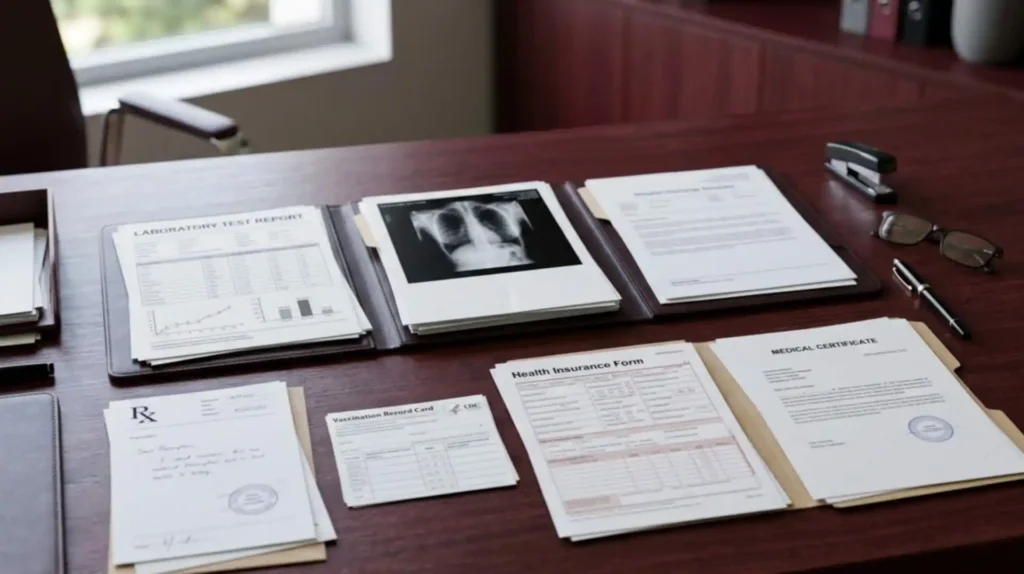
Every medical document tells a story: a diagnosis, a treatment plan, a decision that affects someone’s life. When that document crosses a language barrier, every word must land exactly as intended. This is why understanding the different types of medical documents that need translation is essential for ensuring clear communication and patient safety.
Medical translation goes beyond language skills. It requires clinical knowledge, regulatory awareness, and an unwavering commitment to accuracy. Wherever you are in your healthcare journey as a provider, a company, or a patient, working with a specialist matters.
What Are Medical Documents?
Medical documents are any written or electronic records that relate to a patient’s health, a clinical study, a medical product, or healthcare procedures. They serve as the primary means of communication between patients and providers, across departments, and between jurisdictions. In a globalized healthcare environment, these documents frequently need to move across language boundaries while retaining their full meaning, accuracy, and legal standing.
Broadly speaking, medical documents fall into three categories:
- Clinical documents: directly related to patient care (records, reports, prescriptions)
- Administrative and regulatory documents: used by institutions and authorities (approvals, certificates, compliance records)
- Research and pharmaceutical documents: supporting clinical trials and product development
How Does Medical Documentation Enhance Patient Care?
Accurate medical documentation is the backbone of quality healthcare. When translated correctly, it enables:
- Continuity of care: patients moving between countries or healthcare systems can share their full medical history without data loss
- Informed decision-making: patients who read consent forms and instructions in their native language make better, safer choices
- Reduced medical errors: clear, precise translations of prescriptions and dosage instructions minimize the risk of misadministration
- Regulatory compliance: healthcare providers can meet international standards when their documentation is accurately rendered across languages
- Faster emergency response: multilingual medical summaries allow foreign healthcare teams to act quickly in critical situations
10 Types of Medical Documents That Need to Be Translated

1. Patient Medical Records
These include case histories, examination notes, lab results, and diagnoses. When a patient receives treatment abroad or moves between countries, their medical records must be accurately translated to ensure the receiving physician has a full picture of the patient’s health.
2. Clinical Trial Documents
Protocols, informed consent forms, case report forms, and investigator brochures must all be translated for multinational pharmaceutical trials. Regulatory bodies such as the FDA and EMA require documentation in local languages before approving study participation.
3. Medical Certificates
Fitness-to-work certificates, disability assessments, vaccination records, and death certificates often need certified translation for legal, immigration, or insurance purposes.
4. Discharge Summaries
When a patient is discharged from a hospital abroad, the summary of their treatment, including diagnosis, procedures performed, and follow-up instructions, must be translated for their primary care physician back home.
5. Informed Consent Forms
Patients must fully understand what they are agreeing to. Consent forms for surgeries, procedures, and clinical trials must be translated into the patient’s native language to be legally and ethically valid.
6. Pharmaceutical Documentation
Package inserts, labels, Summary of Product Characteristics (SmPC), and patient information leaflets must be translated into the official language(s) of each country in which a drug is sold or approved.
7. Medical Device Instructions
Instructions for use (IFU), safety warnings, and technical manuals for medical devices must be translated accurately. Regulatory frameworks in most countries, including the EU MDR, require this as a legal obligation.
8. Radiology and Pathology Reports
Imaging reports (MRI, CT scans, X-rays) and biopsy results often require translation when patients seek second opinions or transfer care internationally. These documents are highly technical and demand specialized translators.
9. Insurance and Legal Medical Documents
Medical negligence reports, insurance claim documents, expert witness statements, and legal medical files often require certified translation for court proceedings or international insurance claims.
10. Public Health Materials
Brochures, awareness campaigns, vaccination guides, and disease prevention materials must be translated and culturally adapted to reach non-native-speaking communities effectively. Accuracy here directly impacts public health outcomes.
If you need reliable and accurate medical document translation, contact our expert team today to ensure your documents are translated with precision and confidentiality.
What Happens If Medical Translation Is Wrong?
The consequences of inaccurate medical translation can range from administrative complications to life-threatening errors. Real-world cases have demonstrated that translation mistakes in medical contexts can lead to:
- Incorrect drug dosage due to unit misinterpretation.
- Allergies or contraindications are going undetected because of a mistranslated patient history.
- Surgical procedures were performed on the wrong site following miscommunication.
- Clinical trial data being invalidated due to inconsistent terminology
- Legal liability for healthcare providers and translation agencies.
The stakes are uniquely high in this field. Unlike a marketing brochure, where an error is embarrassing, inaccurate medical report translation can cost a patient their health or even their life.
?When Translation Becomes a Legal Requirement
In many jurisdictions, medical translation is not simply good practice; it is a legal obligation. Key scenarios where certified medical translation is legally required include:
- Immigration and visa medical examinations submitted to embassies or immigration authorities.
- Drug and device registration with national regulatory agencies (e.g., SFDA in Saudi Arabia, EMA in Europe, FDA in the US).
- Court proceedings involving medical records or expert testimony.
- Insurance claims submitted across national borders.
- International clinical trials require local-language documentation.
Failing to provide legally compliant translated documentation can result in rejected applications, regulatory fines, or the inadmissibility of evidence in legal proceedings.
Is DIY an Option for Medical Translation?
With free online tools and AI translation platforms becoming increasingly accessible, some may wonder whether professional translation services are truly necessary for medical documents. The honest answer is: no, DIY is not a safe or viable option for medical translation
Automated tools and non-specialist bilingual staff may handle general content adequately, but medical translation requires a fundamentally different level of expertise, accountability, and precision. The comparison above makes the risks of DIY translation unmistakably clear.
How to Choose a Medical Translation Provider?
Not all translation companies are equipped to handle medical content. When evaluating a provider, consider the following criteria:
- Subject-matter expertise: translators should have backgrounds in medicine, pharmacy, or life sciences.
- Certification and accreditation: look for ISO 17100 certified providers or those offering sworn/certified translations.
- Confidentiality protocols: medical documents contain highly sensitive personal data; ensure NDAs and GDPR-compliant processes are in place.
- Quality assurance process: professional companies use a review-edit-proofread cycle, not single-pass translation.
- Experience with regulatory requirements: especially important for pharmaceutical and device documentation.
- Turnaround time and scalability: can the provider handle your volume without compromising quality?
- Language pair specialization: not every company covers all language pairs with equal proficiency.
Your Reliable Partner for Medical Translation
At Crown Translation Company, we understand that medical documents carry more than words; they carry the health, safety, and rights of real people. Our team of specialized medical translators combines linguistic precision with subject-matter expertise to deliver translations that are accurate, confidential, and compliant with regulatory standards.
Whether you need certified translation of patient records, pharmaceutical documentation, or clinical trial materials, Crown Translation Company offers a dependable, professional solution tailored to your specific needs. We work across a wide range of language pairs and document types, ensuring that your medical communications are always clear, correct, and legally sound.
You can contact us today to discuss your medical translation requirements and discover why healthcare providers and institutions trust Crown Translation Company as their preferred language partner.
FAQs
What makes medical translation different from general translation?
Medical translation requires knowledge of clinical terminology, regulatory frameworks, and patient safety standards that go far beyond general language skills. Errors in medical translation can have life-threatening consequences, which is why subject-matter expertise is essential.
Do I need a certified translator for medical documents?
In many cases, yes. Legal, regulatory, and immigration applications typically require certified or sworn translations. Always check the requirements of the receiving authority before commissioning translation.
How long does medical translation take?
Turnaround times depend on document length, complexity, and language pair. A standard patient record may be completed within 24–48 hours, while large-scale pharmaceutical documentation projects may require several weeks.
Is my medical information kept confidential?
Yes. Crown Translation Company treats all client documents with the highest level of confidentiality. Our translators operate under strict non-disclosure agreements, and our data handling processes comply with relevant privacy regulations.